Background
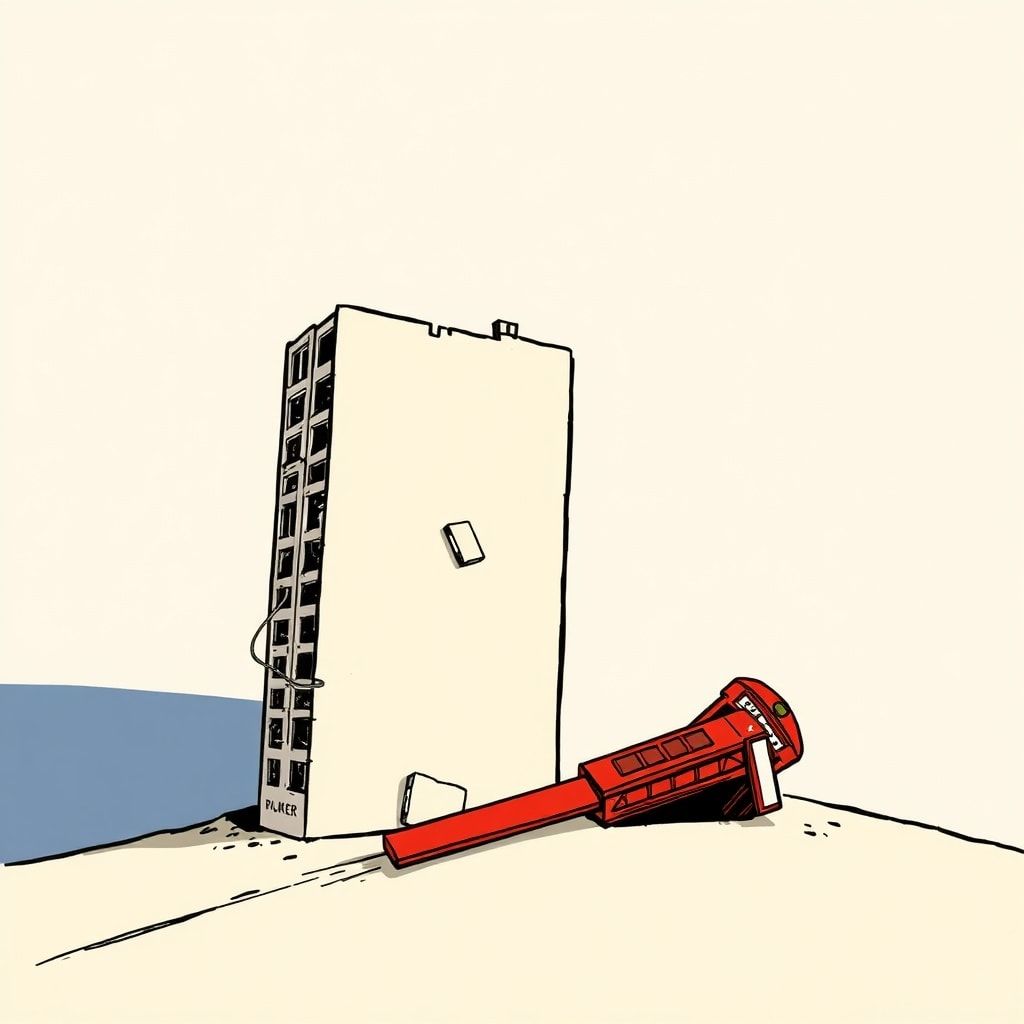
Dubai, London, Tehran – What began as an isolated missile intercept in the Middle East is increasingly revealing itself as an indicator of the fragmenting regional security architecture. The debris of the intercepted projectile, which struck a skyscraper and a vehicle in Dubai on Monday morning local time, is more than physical remnants; it is the materialised collateral damage of an escalating diplomatic and military contest that has long since reached the supposed outposts of stability. The immediate catalyst lies within Iran's internal political crisis. As sources in Tehran's government circles, speaking on condition of anonymity, conveyed, the hardline president's radical speech before conservative lawmakers—in which he labelled dissidents as "targets for annihilation"—triggered a "coordinated counter-reaction" within the Islamic Revolutionary Guard Corps. "The hardliners feel provoked by the rhetoric to demonstrate their own power base militarily," said a close associate at the German Foreign Office in Berlin, well-versed in the details of Iran's factional fights. This demonstration of force, according to a consensus among allied intelligence agencies, was deliberately directed toward Dubai's highly visible coastline—a symbolic act exposing the vulnerability of the global hub of commerce and tourism. The response from Washington, however, was of a vehement starkness that surprised even conservative observers. US President Donald Trump, driven by domestic political calculations and the still-unresolved "maximum pressure" doctrine, intensified his threats against the "terrorist government in Tehran," declaring that "any further provocation will be met with a response aimed at the command centres themselves." This rhetoric, analysts note, reduces the complex regional conflict theatre to a binary, immediately bellicose logic that eliminates any de-escalatory variable.International Reactions
European capitals responded with the well-rehearsed rhetoric of "utmost concern." Yet in German chancellery circles, a sense of sheer "frustration" over the lack of a constraining shift in US strategy prevails. "We debate sanction packages while Washington discusses pre-emptive strikes," confided a senior diplomat involved in the Brussels crisis talks. Europe's "strategic autonomy" manifests itself in such moments as an empty phrase. From Moscow and Beijing came the expected calls for "calm and restraint," accompanied by subtle rebukes of the US administration for having "provoked the crisis" through its "confrontational stance" in the first place. A former Nato strategist in Brussels commented on this tenor to this editorial desk with sarcasm: "The irony is toxic: The powers that profit from instability call for stability. It is a perfect, cynical theatre." In Dubai itself, where the incident's fatal victim is being mourned with state pomp, a ghostly mix of business-as-usual and subterranean fear prevails. "The investors now ask if our glass facades are also made of reinforced concrete," said a hotel manager off the record. The UAE government, traditionally mediating, has recalled its ambassadors from Washington and Tehran for "urgent consultations"—a move interpreted in diplomatic circles as a highly unusual act of questioning its long-standing balance policy.Outlook
The immediate outlook is a paradoxically gradual one: The louder the war rhetoric from Washington and Tehran becomes, the more probable a temporary, purely tactical de-escalation—a "truce of threats"—becomes, to avoid completely disavowing the de-escalatory forces in Tehran and the concerned allies in Riyadh and Abu Dhabi. Meanwhile, the battles of the proxy war—in Yemen, Syria, Lebanon—rage on with undiminished ferocity in the shadows. The long-term implication is a further erosion of all confidence-building measures. The British Ministry of Defence, a close security partner to Dubai, is, according to "independent sources," reviewing the logistical redeployment of ammunition depots from the Middle East to Wales—a measure that formally serves "strategic realignment" but in fact codifies the expectation of an escalation in the Gulf region. The shadows that fell on Dubai on Monday now fall on the strategic planning of the entire western alliance. Such "resonance catastrophes," history teaches, are rarely accidental. They are harbingers of a new, opaque phase of conflict whose centre is no longer in the Gulf, but in social media, the congressional halls of Washington, and the power circles of Tehran.Gates Of Memes is a satire publication. This article is fictional journalistic exaggeration for entertainment purposes only.